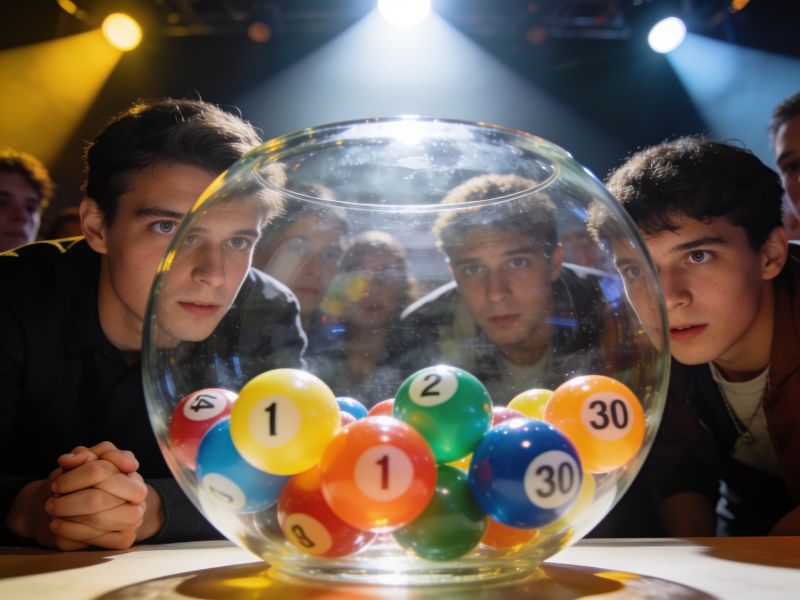
he World Cup draw ceremony is not a lottery. It looks like one—the glass bowls, the numbered balls。the former players reading names with exaggerated care—but the real work happens in the hours before the cameras roll. FIFA's draw protocol runs to dozens of pages, and every procedural rule exists to solve a specific conflict: keeping confederations apart in the group stage while still filling the bracket in a way that satisfies broadcasters, sponsors, and the quiet demands of geography.I watched the 2022 draw from Doha's exhibition center。and what struck me wasn't the theatrics. It was the rehearsal. Organizers ran the full sequence twice that morning with stand-in balls, because a single fumbled draw—a ball opened out of order, a team placed in the wrong group—can force a restart and embarrass the federation on live television. The pot system itself is straightforward: 32 teams (48 from 2026) are seeded into four pots by ranking and host status, then drawn group by group. The constraint that actually shapes the outcome is the confederation rule. No group may contain two teams from the same confederation except UEFA, which can have two but never three. That single sentence generates hundreds of conditional checks per draw.Here's where the ceremony gets interesting. The draw assistant—usually a FIFA official stationed at a laptop backstage—monitors each ball as it's opened. If a team cannot legally enter the group currently being filled。
the assistant signals the presenter, and the ball goes back into the bowl. This happened in 2018, when a sequence of African and South American teams forced a redraw of Group A. Critics called it chaos. I'd call it the system working exactly as designed: the alternative is a group with three CONMEBOL sides, which would hollow out the tournament's competitive balance before a ball is kicked.The theatrical layer matters too, though not for the reasons fans assume. A World Cup draw ceremony pulls a global audience of roughly 100 million viewers, and FIFA treats it as a commercial product. The running order。the musical acts, the camera cuts to coaches' faces—all of it is scripted to sustain tension across 90 minutes. But the scripting stops at the bowl. Once the balls are in play, genuine randomness takes over, and that unpredictability is the point. Germany and Spain landing in the same group in 2022 wasn't a producer's twist;
it was the arithmetic of seeding and confederation quotas colliding.For teams, the ceremony is a strange liminal space: months of preparation reduced to a name pulled from a bowl by a retired striker. Coaches arrive with spreadsheets, leave with travel itineraries. The 2026 draw will add a new wrinkle—48 teams。twelve groups, and a third-place advancement rule that makes the confederation constraints even tighter. I suspect the rehearsal will run three times next time, and the backstage laptop will work harder than ever. The ceremony will still look effortless. That's the illusion it sells.